
Post 67: What Life Feels Like When You Stop Chasing Therapy — and Start Building From Home
Part 5 of 5 — What Every Parent Should Know to Truly Help Their Child Improve Movement, Posture, and Quality of Life
There is a particular kind of exhaustion that only parents of children with complex needs truly understand.
It is not just physical tiredness — though it is that too. It is the exhaustion of always being in motion. Always looking for the next thing. The next appointment, the next specialist, the next approach that might finally be the one. Managing calendars, coordinating schedules, driving to clinics, sitting in waiting rooms, going home and trying to remember everything that was said and whether you are doing it right.
It is the exhaustion of chasing.
And what I want to tell you in this final post — after four weeks of building a picture together — is that there is another way to live this.
Not a way that abandons the work. Not a way that gives up on your child's progress or stops taking their development seriously.
A way that brings the work home. That quiets the noise. That replaces the constant outward motion with something steadier, more grounded, and — for many families — more effective.
This is what life can look and feel like when fascia therapy becomes part of your daily rhythm.
Trips Out Become Trips For Joy
One of the first things families describe when they begin working with fascia therapy at home is a shift in how they experience leaving the house.
For years, going out has meant appointments. It has meant therapy bags and equipment, timing meals around sessions, managing a child who may be tired or overstimulated by the time they arrive. It has meant that the family's relationship with the outside world has been largely organized around a medical schedule.
When the primary therapeutic work moves home — when you have the knowledge and the tools to do something meaningful every day within your own walls — the equation changes.
Going out becomes optional in a different way. You go because you want to. Because it is fun. Because your child wants to see something or be somewhere. Not because the calendar demands it.
One mother in my program described it simply: trips out are just for fun now. Everything else happens at home.
That is not a small shift. For a family that has spent years living around a therapy schedule, it changes the texture of daily life in ways that are hard to fully describe until you feel them.
The Pace Of Life Changes
There is a particular rhythm that builds when therapy lives inside your home rather than outside it.
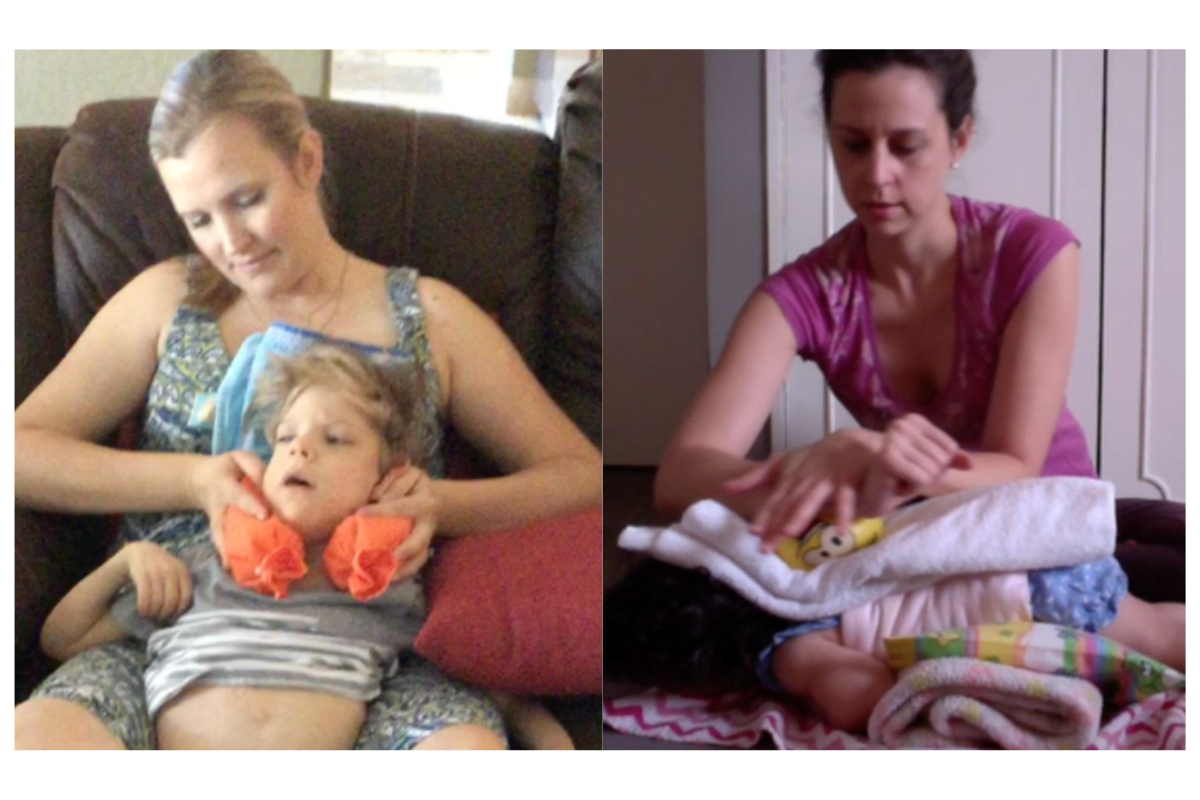
The session doesn't require preparation, travel, waiting, and recovery. It requires a cleared space in the living room and twenty minutes of quiet presence with your child. It can happen after school, before bed, on a slow Saturday morning, on vacation — whenever the two schedules that matter are aligned: yours and your child's.
There is no coordinating with a clinic's availability. No managing your child's mood against a fixed appointment time. No feeling behind because you missed a session.
You work when it works. And because the input is gentle and consistent rather than intense and sporadic, that flexibility doesn't compromise the results — it supports them. Fascia responds to regularity, not heroics.
Families describe this rhythm as a slower pace. A home-centered life. A sense that the family is no longer organized around therapy — therapy is organized around the family.
Something Changes In The Parent Too
I want to say something that often gets left out of the clinical conversation about therapy outcomes — and it matters.
When parents move from observers to active participants, something shifts in them too.
The anxiety of not knowing what is happening in your child's body — of being dependent on appointments for information, for reassurance, for a sense of progress — begins to ease. Because you are learning to see for yourself. You are learning to read the small signals. The breath that deepens a little. The posture that holds a moment longer. The muscle tone that is slightly quieter after a session.
You stop waiting for the clinic visit to tell you whether things are going well. You begin to trust your own eyes.
And with that trust comes something that is genuinely hard to put a name to — a kind of groundedness. A sense of being part of the process rather than watching it from the outside. The feeling that you are not just hoping something will work, but doing something that you understand, that makes sense to you, and that your child's body is responding to.
One parent described it this way: what I appreciated most was feeling empowered instead of overwhelmed. I'm part of the process now.
That shift — from overwhelmed to empowered, from observer to participant — is not a side effect of this work. In many ways, it is the point.
For more on what that transition actually feels like for families, this post on caregiver burnout and what changes when the approach shifts speaks directly to that experience.
The Changes In Your Child Are Quieter — And They Last
I want to be honest with you about what progress looks like in fascia work, because it is different from what most therapy programs promise.
It is not dramatic. It is not fast. It does not arrive with a measurable milestone attached to it in the first week.
What it looks like, in the beginning, is quieter than that. A breath that feels slightly more open. A moment of sitting that holds a little longer before the collapse. A hand that is not quite as tight. A child who seems a little more comfortable in their body than they were last month.
These are not nothing. These are the body beginning to reorganize from the inside. And because the change is coming from the connective foundation — not from a compensating muscle being held in position — it tends to stay. It builds on itself. Month by month, the picture shifts.
Parents who have been in this work for six months, a year, two years describe something different from the incremental gains and regressions they experienced before. They describe a steadier trajectory. Progress that doesn't disappear after every growth spurt. A body that is becoming more resilient, not just temporarily better organized.
That is what changes when the foundation is being addressed. Not a cure. Not a miracle. A body that is finally getting the kind of support it was always asking for — and beginning to respond.
This post on what the first wins of fascia therapy actually look like is worth reading so you know what to watch for in the early weeks.
This Is Where The Series Has Been Leading
Over the past five weeks, we have covered a lot of ground together.
We started with what fascia actually is and why it matters. We looked at why posture keeps collapsing — and why it has nothing to do with effort or willpower. We explored why the therapy approaches most families have been using keep hitting a ceiling. We talked about why you — not another specialist — may be the most important therapeutic presence in your child's life.
And now we arrive here: at a picture of what becomes possible when all of those pieces come together. A calmer life. A home-centered rhythm. A parent who feels grounded and capable rather than exhausted and behind. A child whose body is being supported at the layer that matters most — consistently, gently, and by the person who knows them best.
This is not a distant possibility. Families are living it right now.
If you want to understand the complete picture — how fascia works, why it matters for your child specifically, and what a structured approach to addressing it at home actually looks like — I'd love to see you at my free live class. It is the natural next step from everything this series has introduced, and it will give you the map that ties all of these pieces together.
The CALM class is where this conversation continues — and where the next chapter begins.
And if you want to read one family's story of what this journey looked like from the beginning, this post follows one mother's experience through the bootcamp — from the first session to the moment things began to shift.
Ready to Start?
Take your first step into fascia therapy with our short, parent-friendly workshop:
The #1 Fascia Therapy To Improve Torso Control. I teach you the first exercise and how to make the binder so you can help your child today.
Gentle, effective, and easy to begin—no experience needed.
Want to Go Deeper?
If you’re ready to fully embrace this gentle approach and receive personalized support, apply for TheraParent Coaching—our therapeutic coaching program designed for dedicated parents like you.
Includes weekly calls, a tailored plan, and a supportive community.
Apply here – it’s free to explore.
Stay connected and inspired every week.
Subscribe to our weekly blog updates and receive new posts, encouragement, and fascia therapy tips right in
your inbox. So never miss the support and ideas that can make a difference in your journey.
