Post 73: Your A, Your B — When the Win Belongs to the Parent
On a recent coaching call, I didn't start with techniques.
I had videos to review and corrections ready to share. Before any of that, I asked the parents a simple question: How is this working for you? Or not working? What are you struggling with, and what are you celebrating?
I expected to hear about the children: better sleep, a looser neck, a calmer body. Some of that came up. But what I want to share here is what we celebrated the most: the wins that belong to the parents.
When You're Waiting to See Something
Let me start with something honest.
When you begin something new with your child, you watch closely. After years of appointments, exercises and recommendations, it makes sense to ask, Is this one going to be different?
That question can quietly turn every session into a test. Did it work today? Did he move better? Am I doing it right?
I understand that pressure. I also want to offer you another way to look at it, because the parents on this call showed me one.
"My Win Is My Own"
One mom has a six-year-old son. She told us she wasn't celebrating any big changes in him yet, apart from a few small signs. Then she said that her win was her own.
For six years, she said, every technique she tried left her frustrated. She never felt she had enough strength. She never felt she had enough time. She never felt she was enough.
This time is different. She's tired, because the only time she can find is late in the day, right before dinner. When she starts, though, she enjoys it. She described the feeling of her hands on her son's body. He still wiggles and moves a lot. She used to get tense and tell him to stop. Now she laughs and hugs him, and then they keep going.
Her son has started looking for her more than usual. Her husband asked their son why he always wants to be with Mom these days. She described it as something new growing between them. She was almost shy about it, as if she might be making this up.
She is not! Every so often, a mother tells me something like this. She shares, almost quietly, that she feels more connected to her child than she has in a long time. Each time, I'm reminded that this connection is real, and it's one of the most meaningful things that can grow from this work.
She also told us that her son wakes up very early, before the sun. Lately, instead of begging him to sleep a little longer, she grabs the neck support, places it on the bed, and does two minutes of the neck technique right there. He lets her do it, with no cartoons needed. Her husband can't believe it.
What Changes When You Stop Feeling Like You're Failing
When a parent stops feeling like they're failing at what they were told to do, the whole house changes. How you see yourself as a mother or father changes too.
I've heard this from many families over the years: I'm not rushing anymore. I feel like I'm respecting my child more.
Those sentences matter to me as much as any measurement. A parent who feels capable and connected is a parent who keeps going.
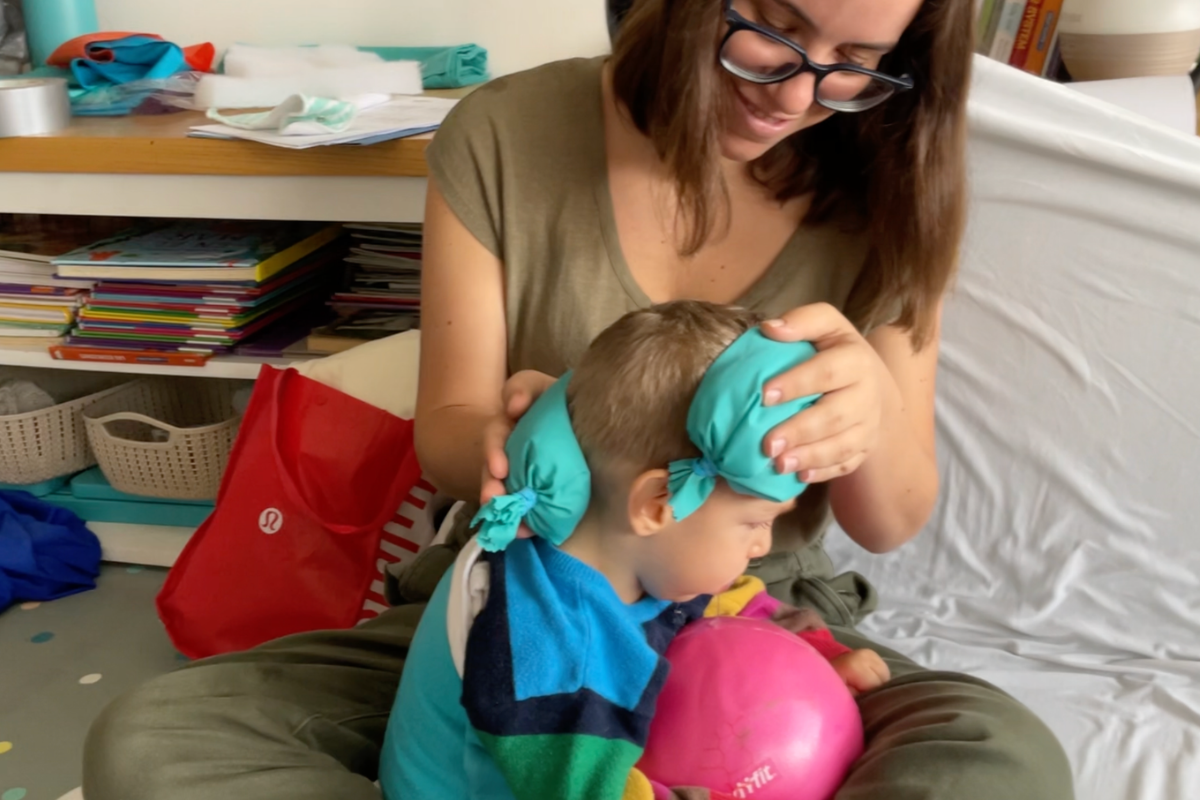
That's also why I teach this way. We don't fight a tight muscle or force a movement that isn't available yet. We go slowly into the tissue and send it a message: you are safe here, and you can grow here. It makes sense that a parent working this way starts to feel calmer too. The same message reaches both of you.
Your A, Your B
Then another mom raised her hand. Her daughter is 25, so this family is further down the road than most of the group.
She started with something I say often: you've got to start somewhere. She said it will look messy at first, and the point is to begin anyway, without waiting for it to be perfect.
Then she shared something an educator told her when her daughter started kindergarten. It has guided her family ever since:
"In our school, we don't define A, and we don't define B. As long as they're going from A to B, we're good."
You define your own A, which is where your child is today. You define your own B, the next step that makes sense for your child. You move toward it. When you get there, you define the next one.
She said that if you measure your child against everyone else's A and B, you won't get anywhere. The only real problem is going backwards or not moving at all.
Then she brought it right back to the group. Another mom on the call had shared that her son can't stop moving during their sessions. He kicks, grabs the ball and pushes it away. To her, this mom said, getting him to stop wiggling, that's your B right now.
That's the beauty of it. Your B might be two minutes on the abdomen without a struggle, or one morning session in bed, or remembering the neck support three days in a row. Another family's B can be something completely different, and that's fine.
Why the Practice That Feels Good Is the One You'll Keep
Here's what I said to the group after hearing all of this.
The win I most want for every family I work with is you feeling confident that you can do this.
The changes in your child will come. For many families, some are coming already. The bigger changes come from consistency, from you continuing week after week, month after month. You only keep doing something when it feels doable and when it feels good, for you and for your child.
That's why the mom who laughs instead of getting tense matters so much. Enjoying it is what makes it possible to keep going.
A Small Practice for This Week
If you're working with your child at home, or thinking about starting, try this:
Name your A. Describe where your child is today, honestly and without judgment.
Name your next B. Choose one small, realistic step. Make it yours, not someone else's.
Choose your time. Pick the moment in your day that actually works, even if it's two minutes in bed at 5:30 in the morning.
Notice one moment of connection. Notice how it felt to be there with your child, not only what changed in their body.
That last one is the win people miss most often. It's also often the one that keeps you going.
To the parents on this call: thank you for being so honest. You reminded me why I do this work.
Ready to Start?
Take your first step into fascia therapy with our short, parent-friendly workshop:
The #1 Fascia Therapy To Improve Torso Control. I teach you the first exercise and how to make the binder so you can help your child today.
Gentle, effective, and easy to begin—no experience needed.
Want to Go Deeper?
If you’re ready to fully embrace this gentle approach and receive personalized support, apply for TheraParent Coaching—our therapeutic coaching program designed for dedicated parents like you.
Includes weekly calls, a tailored plan, and a supportive community.
Apply here – it’s free to explore.
Stay connected and inspired every week.
Subscribe to our weekly blog updates and receive new posts, encouragement, and fascia therapy tips right in
your inbox. So never miss the support and ideas that can make a difference in your journey.
