
Post 66: Why You (the parent) — Not Another Specialist — May Be the Most Important Therapist in Your Child's Life
Part 4 of 5 — What Every Parent Should Know to Truly Help Their Child Improve Movement, Posture, and Quality of Life
There is something I want to say to you that most of the therapy world has never said clearly enough.
You are not the observer in your child's therapy journey. You are not the driver, the scheduler, the one who holds the bag and waits in the waiting room. You are not support staff for the real work that happens in the clinic.
You are the most consistent therapeutic presence in your child's life. And that consistency — the kind only a parent can offer — is not a small thing. It may be the most important thing.
I know that might be hard to believe, especially if you've spent years being told to leave the therapy to the professionals. So let me explain what I mean — and why it matters more than most people realize.
The Math That Changes Everything
Think about what a typical therapy schedule looks like. One session, maybe two, per week. An hour each time. On a good week, that's two hours of therapeutic input out of 168 hours.
The rest of those hours — the bath, the meal, the morning routine, the quiet moment before sleep, the car ride, the afternoon on the living room floor — those hours belong to you.
No specialist, however skilled, can match what you offer simply by being there. Not because of technique. Because of frequency. Because of presence. Because your child's body is receiving input — or not receiving it — in every one of those hours, not just the two that happen in a clinic.
Fascia responds to consistent, gentle input over time. Not to intense bursts of work separated by long gaps. This means that the parent who learns how to work with their child's connective system at home — even in short, gentle sessions woven into the day — is offering something no therapy schedule can replicate.
The frequency is the therapy.
There Is Something Else Only You Have
Beyond frequency, there is something even more specific that only you can bring to this work.
Your child trusts you.
That trust is not a soft, sentimental thing. It has a real effect on how your child's body responds during therapy. A body that feels safe — that recognizes the hands touching it, that isn't bracing for something unfamiliar or uncomfortable — is a body that can actually receive input rather than guard against it.
I have been a therapist for over two decades. I genuinely love the children I work with. But even the most loving therapist has days when a child is not in the mood, when the body is guarded, when the session becomes a negotiation rather than a collaboration.
You know your child's rhythms in a way no clinician ever will. You know when they are most relaxed, most receptive, most at ease. You can choose the moment — after the snack, during the quiet time before bed, on a slow Saturday morning — when the body is ready. A therapist cannot do that. They work within an appointment slot. You work within a relationship.
That relationship is not separate from the therapy. In fascia work, it is part of the therapy.
You Are Already Doing More Than You Think
Here is something I notice with almost every parent who comes into my programs: they arrive thinking they are not enough. That they don't have the training, the knowledge, the skill. That the real work happens elsewhere and they are just trying to keep up.
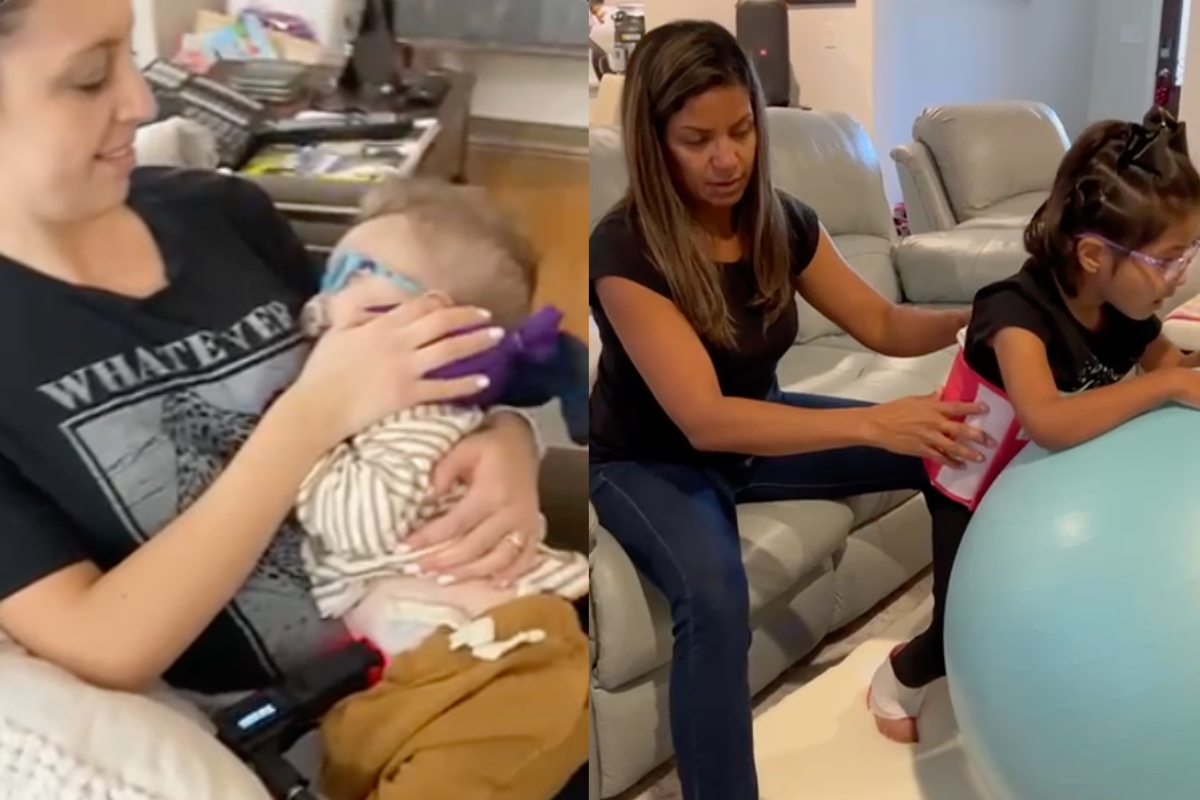
And then they learn. They begin to understand what their child's body is actually doing and why. They learn a gentle technique, and they try it. And their child — who has resisted therapy for years — relaxes into their hands.
Because those hands are familiar. Because those hands have always meant safety.
One parent in my program described it this way: she said it was the first time therapy didn't feel like something she was doing to her daughter. It felt like something they were doing together.
That shift — from doing to someone to being with someone — is not just a feeling. It changes what the body receives. And it changes what the body can do with it.
If you'd like to read about what this looks like in practice for other families, this post takes you inside a real coaching call where parents are doing exactly this work.
This Is Not About Replacing Your Therapy Team
I want to be clear: what I'm describing is not about stepping away from your child's therapists, doctors, or specialists. They have an important role. Their expertise matters.
What I'm inviting you to consider is that your role matters too — in a different way, and perhaps more than you've been led to believe.
The therapist sees your child for an hour. You see your child for a life. And when you understand how to use that time — how to support the fascial system gently and consistently, how to recognize the small shifts that tell you something is changing — you become an active participant in your child's progress rather than a witness to it.
That is not a small upgrade. For many families, it is the thing that finally makes the difference.
For more on what it looks and feels like to step into that role, this post on the power of a parent's hands is worth a read.
What Becomes Possible When You Lead
When parents begin to see themselves as capable, informed participants — not just caregivers — something shifts in the whole family system.
Therapy stops being something that happens somewhere else and comes home as homework. It becomes something that lives inside your daily rhythms — gentle, purposeful, and yours. The appointments become one piece of a larger picture rather than the whole picture.
Families describe it as a slower pace. A home-centered life. Trips out for enjoyment rather than obligation. The sense that they are no longer chasing — they are building.
That is what becomes possible when the parent leads. Not because the parent replaces the expert. But because the parent was always the expert in the most important thing: knowing their child.
In the final post of this series, we'll talk about what that daily life can actually look and feel like — and the calmer, more grounded family rhythm that becomes possible when fascia therapy becomes part of your home.
Next week: What life looks and feels like when you stop chasing therapy — and start building from home.
And if you've ever wondered whether it's possible to trust your own eyes when it comes to your child's progress, this post on stopping the cycle of self-doubt speaks directly to that.
Ready to Start?
Take your first step into fascia therapy with our short, parent-friendly workshop:
The #1 Fascia Therapy To Improve Torso Control. I teach you the first exercise and how to make the binder so you can help your child today.
Gentle, effective, and easy to begin—no experience needed.
Want to Go Deeper?
If you’re ready to fully embrace this gentle approach and receive personalized support, apply for TheraParent Coaching—our therapeutic coaching program designed for dedicated parents like you.
Includes weekly calls, a tailored plan, and a supportive community.
Apply here – it’s free to explore.
Stay connected and inspired every week.
Subscribe to our weekly blog updates and receive new posts, encouragement, and fascia therapy tips right in
your inbox. So never miss the support and ideas that can make a difference in your journey.
