
Post 56: How Much Time Does Fascia Therapy Actually Take?
There's No Perfect Amount of Time
Somewhere on your already-full calendar — between school, appointments, siblings, work, and whatever's left of you at the end of the day — you're trying to find a slot for "the therapy." And a question keeps circling: how much time do I actually need to give this for it to count?
If you've been waiting to start until you find the "right" amount of time, I want to save you the wait. There isn't one right number. There's a starting point, and there's a plan that grows with you.
The Guilt of Not Doing Enough
I hear this from almost every family before they start: a fear that if they can't commit to hours a day, it won't work — or worse, that doing "only" a small amount of time means they're not trying hard enough for their child. That guilt is heavy, and it's also not accurate. It comes from comparing yourself to an imaginary family with more time, more hands, and less going on — a family that doesn't actually exist.
Where Most Families Begin
If you're just getting your first taste of this work through our torso control workshop, the entry point is simple: one technique, the torso exercise, done for about 20 to 30 minutes a day. That's it. It's intentionally small — enough to start feeling what gentle, fascia-informed work actually is, before you've even decided whether TheraParent is the next step for your family.
The real customization — figuring out exactly how much time your specific family has, and building a plan around that — is something that happens once you're inside TheraParent. That's where I sit down with your assessment, your lifestyle, how many other kids you have, what your week actually looks like, and design a plan around the time you genuinely have, not the time a generic program assumes you have. For some families inside the program, that ends up being closer to four hours a day. For others, it's forty minutes. Both are real, working plans — because they were built around a real family rather than an average one.
I've written before about what it looks like to build a calm therapy that fits your life rather than reshaping your life around therapy. This post goes a layer deeper into the actual time math.
It's Not Just the Timed Work
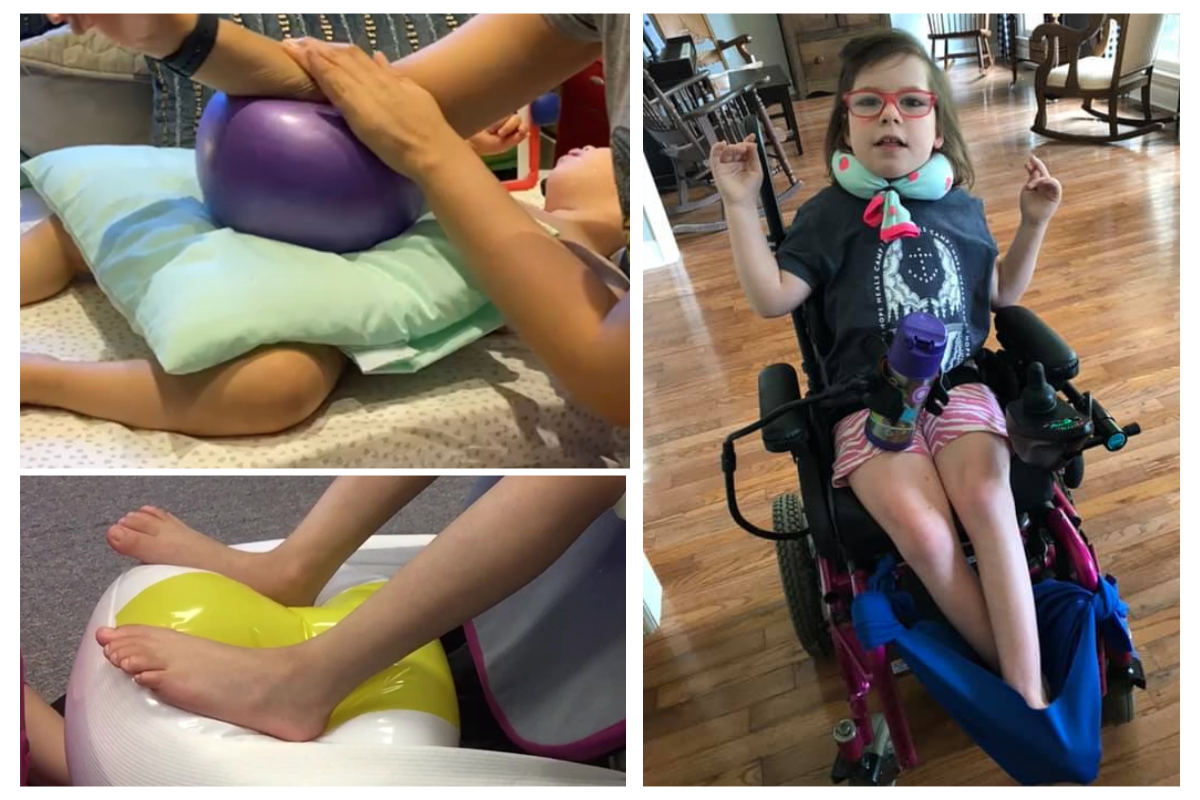
Here's something worth knowing before you start counting minutes: the structured work with tools — the balls, the sponges, the gentle vibration — is only one half of fascia-friendly living. The other half doesn't need a timer at all.
It's how your child rests on the couch. How they're positioned during play. Whether the chair, the stroller, or the floor time you already have is helping their fascia or quietly working against it. None of that requires you to "do therapy" — it requires seeing the ordinary moments of your day a little differently, and making small adjustments to the environment your child is already in. A child who spends two hours a day resting in a more fascia-friendly position is getting support during time you weren't counting at all.
So when you're weighing how much time you have, remember you're not only weighing the minutes with a ball in your hand. You're also weighing how the rest of the day — the parts that were already happening — can quietly work in your child's favor.
Why "Less" Can Still Be Enough
Part of what makes the timed work fit into smaller windows is how it's structured. A typical piece of the plan isn't a set of repetitions you're rushing through — it's spending a focused stretch of time, often 20 to 30 minutes, on one specific area with one specific tool, held steady once you find the right spot. You're not constantly repositioning or switching tasks. Once you and your child are settled, the work itself is calm and repetitive in the best sense — which is part of why even a short, well-used window can be meaningful.
When More Isn't Actually Better
Some families come to this work already trained by years of intensive programs — used to doing four or five hours a day without question, because that's what they were taught "enough" looks like. When they join TheraParent, I often have to walk them in the other direction: down to three hours, then down again if even that becomes unsustainable. Not because less effort is the goal, but because a routine that burns a family out doesn't survive contact with real life. A pace you can keep going is worth more than a pace you'll quit in six weeks.
My general guidance is to build in at least one full day off each week. If both parents work, that might mean leaning a little more into weekends and a little less during the week. There's room to shape it around your actual life rather than an ideal one.
This is also, gently, part of why I think so much about protecting parents from burnout inside this work — a depleted parent isn't able to show up consistently, no matter how good the plan looks on paper.
The Shift: From Volume to Consistency
If you take one thing from this, let it be this: showing up for a focused, calm window most days — plus a fascia-friendly environment the rest of the time — will move your child further than two exhausting hours you can only manage once a week before burning out. This work rewards consistency over time far more than it rewards intensity in any single session. That's part of what it means to step into the role you're capable of playing here — not the most heroic version of yourself, just a steady, sustainable one.
Ready to Start?
Take your first step into fascia therapy with our short, parent-friendly workshop:
The #1 Fascia Therapy To Improve Torso Control. I teach you the first exercise and how to make the binder so you can help your child today.
Gentle, effective, and easy to begin—no experience needed.
Want to Go Deeper?
If you’re ready to fully embrace this gentle approach and receive personalized support, apply for TheraParent Coaching—our therapeutic coaching program designed for dedicated parents like you.
Includes weekly calls, a tailored plan, and a supportive community.
Apply here – it’s free to explore.
Stay connected and inspired every week.
Subscribe to our weekly blog updates and receive new posts, encouragement, and fascia therapy tips right in
your inbox. So never miss the support and ideas that can make a difference in your journey.
