
Post 63: The Missing Piece in Your Child's Therapy — And Why No One Told You About It
Part 1 of 5 — What Every Parent Should Know to Truly Help Their Child Improve Movement, Posture, and Quality of Life
If you've been doing everything your child's therapy team recommended — the stretches, the positioning, the strengthening exercises — and still feel like something important is missing, you're not imagining it.
There is something missing. And most parents — and even many therapists — have never been taught what it is.
It's not a new exercise. It's not more therapy hours. It's a system inside your child's body that most of us learned almost nothing about in school.
It's called fascia. And once you understand it, you'll never see your child's body the same way again.
What Is Fascia, Exactly?
Most people have heard the word before — usually in passing, or attached to something that sounds complicated. So let me explain it the way I explain it to every parent I work with.
Imagine a bowl of jello. Not just the jello itself, but the fruit suspended inside it — the berries, the slices, the pieces held in place by the gel around them.
Now imagine that the jello is your child's body. The fruit — the pieces suspended inside — are everything you learned about in basic anatomy: the bones, the muscles, the organs, the nerves.
And The Jello? That's The Fascia.

Fascia is a continuous web of connective tissue that runs through the entire body — from head to toe, inside and out — holding everything in its right place, giving the structure its shape, and allowing all the parts to communicate and move together as one organized system.
It's not just a wrapper around the muscles, the way many of us were taught. It goes far deeper than that. Every bone, every organ, every nerve — every "fruit" in that bowl — is embedded in this connective web. In fact, we actually begin life in fascia. As embryos, we develop inside this system. It's the foundation everything else is built upon.
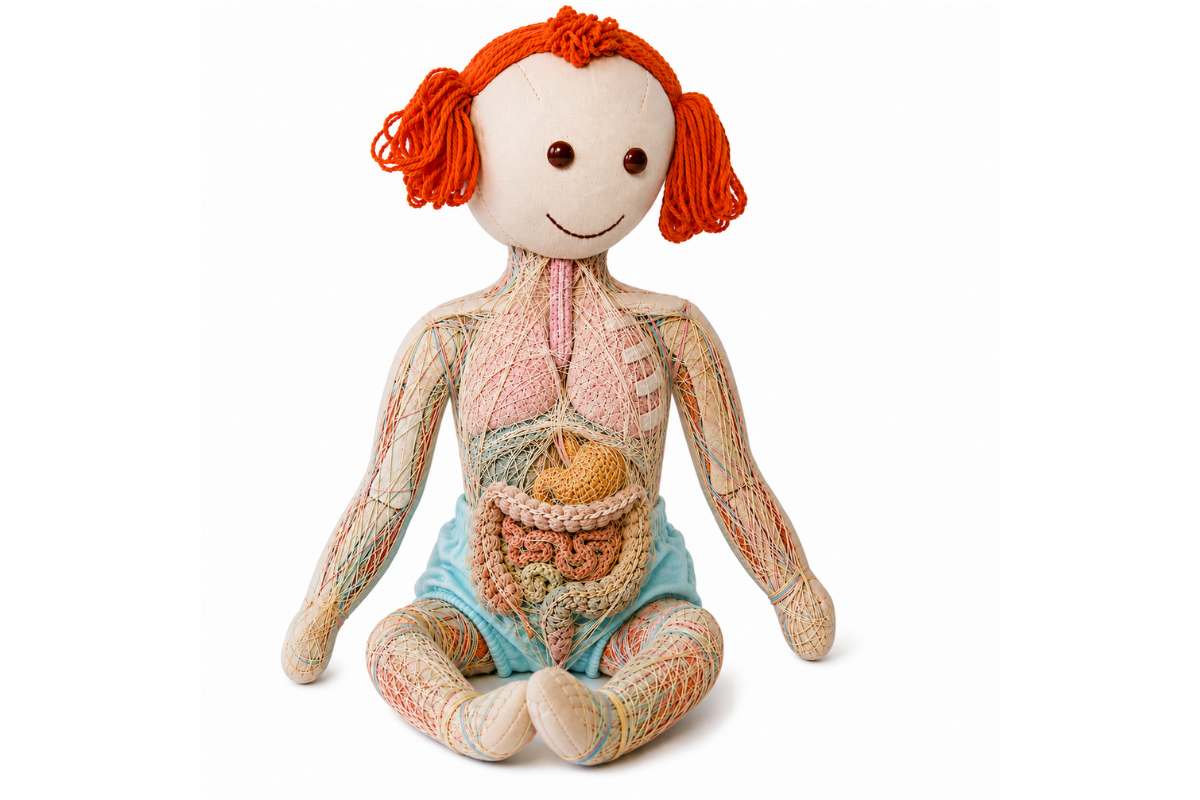
The founder of osteopathy, Dr. Andrew Taylor Still, called fascia the living matrix. He said: life depends on fascia.
That's not an exaggeration. It's a description of how central this tissue is to everything the body does.
If you'd like to go deeper on what fascia therapy looks like in practice for children with CP, this post is a good next read.
Why Hasn't Anyone Told Me About This?
That's the question I hear most often — and it's a fair one.
The honest answer is that our understanding of fascia has changed dramatically in the last two decades. When I trained as a physiotherapist, we learned that fascia was essentially a covering — a thin film around the muscles that wasn't particularly important on its own. Research since then has completely rewritten that picture. We now know that fascia is a whole-body system, not a passive wrapper. It has its own cells. It communicates. It responds. It remodels.
But that knowledge takes time to reach clinical practice. Most therapy approaches — strengthening, stretching, positioning — were developed around an older model of the body. A model that was mostly about muscles, joints, and movement.
Fascia wasn't part of the picture.
Which means that for many children, an entire layer of the body has been left unaddressed — not out of negligence, but because no one had the tools to see it yet.
What does this mean for a child with cerebral palsy?
When the fascial system is well-organized — when the jello is properly set — the body has internal support. The bones stay where they belong. The organs have space. Movement flows through the whole system without friction or compensation.
But when the fascial system loses its balance — when the jello begins to soften or collapse — the body has to find other ways to hold itself together. And what it typically reaches for is muscle tone.
This is why many children with cerebral palsy show patterns of increased tone, postural collapse, or asymmetry — not because their muscles are inherently wrong, but because the deeper scaffolding underneath isn't providing the support it should. The muscles are working overtime to compensate for a system that hasn't been addressed.
Think about the tent analogy for a moment. A tent stays upright because of a precise balance between the poles inside, the fabric, and the guide ropes pulling outward. When that balance is right, the tent holds its shape beautifully. When any element is off — a pole too loose, a rope too slack — the whole shape starts to distort.
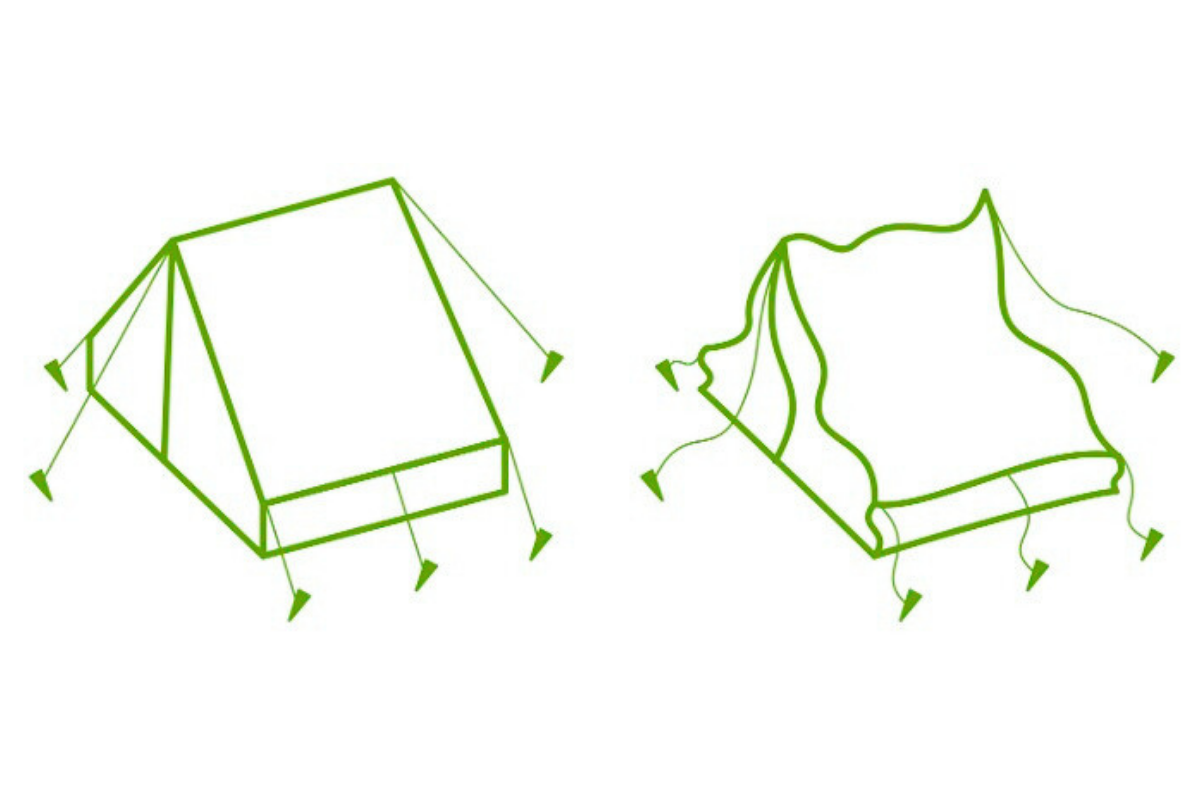
Your child's body works the same way. The symptoms you see — the tone, the postural challenges, the difficulty with movement — are often the tent losing its shape because the tensional balance underneath has been disrupted.
If you want to understand more specifically how this shows up in posture, head control, and torso stability, this post walks you through it in detail.
This Changes The Question We Should Be Asking
Most of the therapy world is trained to ask: how do we strengthen the muscles, improve the range of motion, or correct the posture?
Those are not bad questions. But they are downstream questions — focused on the fruit, when the jello needs attention first.
The question that fascia therapy starts with is different: is the internal scaffolding strong enough to hold the structure?
When we begin working at that level — gently, consistently, in ways the tissue can actually respond to — something shifts. Not overnight. Not dramatically. But steadily, from the inside out.
Parents often describe it as the first time they felt like they were finally working with their child's body, rather than trying to override it.
What This Means For You
You don't need to have a science degree to understand fascia. You don't need to speak the clinical language or memorize the anatomy.
What matters is that you begin to see your child's body as a connected, living system — one that has an internal logic, and one that responds to the right kind of input in ways that traditional approaches alone often cannot reach.
In the weeks ahead, I'll be sharing more about what happens when that system is under-supported, why the patterns you see every day actually make sense through a fascia lens, and what becomes possible when parents become active, informed participants in supporting it.
This is the first piece of a five-part conversation — and I'm glad you're here for it.
Next week: Why your child's posture keeps collapsing — and why it has nothing to do with effort or willpower.
And if part of you is still wondering whether fascia therapy is the right direction for your child, this post addresses the most common doubts parents have when they're just getting started.
Ready to Start?
Take your first step into fascia therapy with our short, parent-friendly workshop:
The #1 Fascia Therapy To Improve Torso Control. I teach you the first exercise and how to make the binder so you can help your child today.
Gentle, effective, and easy to begin—no experience needed.
Want to Go Deeper?
If you’re ready to fully embrace this gentle approach and receive personalized support, apply for TheraParent Coaching—our therapeutic coaching program designed for dedicated parents like you.
Includes weekly calls, a tailored plan, and a supportive community.
Apply here – it’s free to explore.
Stay connected and inspired every week.
Subscribe to our weekly blog updates and receive new posts, encouragement, and fascia therapy tips right in
your inbox. So never miss the support and ideas that can make a difference in your journey.
