
Post 45: Does Wearing a Binder Really Help Children With Cerebral Palsy? The Science of Passive Fascia Therapy
There are days when everything feels like too much.
Maybe you're sick. Maybe you didn't sleep. Maybe life just got in the way — an unexpected call, a difficult morning, a body that simply refused to cooperate. And in the middle of it all, there's this quiet guilt sitting in the back of your mind: I didn't do the exercises today. I'm falling behind. My child is missing out.
If that sounds familiar, I want you to read this carefully — because I think it might change the way you see your role on the hard days.
You Are Doing More Than You Think
In my many years of working with children who have cerebral palsy and other neuromuscular conditions, one of the most consistent things I witness is the weight parents carry when they can't show up the way they planned.
They apologize on calls. They feel they've let their child down. They count the days they missed and carry them like stones.
And I understand it. I really do. When you've learned that your child's progress depends on daily input, every missed session can feel like a step backward.
But here's what I've come to understand deeply in my clinical work: therapy is not only what happens in the thirty minutes you spend actively doing exercises. It's also what happens in the hours in between — quietly, continuously, without you lifting a finger.
That's what I want to talk about today.
What Passive Tools Actually Do
The binder, the wrap, the neck support — these aren't accessories. They're not just comfortable additions to your child's day. They are active therapeutic tools that keep working on your child's body from the moment they're put on.
Here's why.
Fascia — the connective tissue network that runs throughout your child's entire body — responds to sustained, gentle input over time. It doesn't need intensity. It doesn't need force. What it needs is consistent contact and gentle pressure that signals the nervous system: this area is supported, it is safe to release, it is safe to reorganize.
When your child wears a well-fitted binder, the batting inside is gently pressing against the tissues of the torso. The ribs and the abdomen are being connected. The body is receiving proprioceptive input — information about where it is in space — all day long, without a single technique being performed.
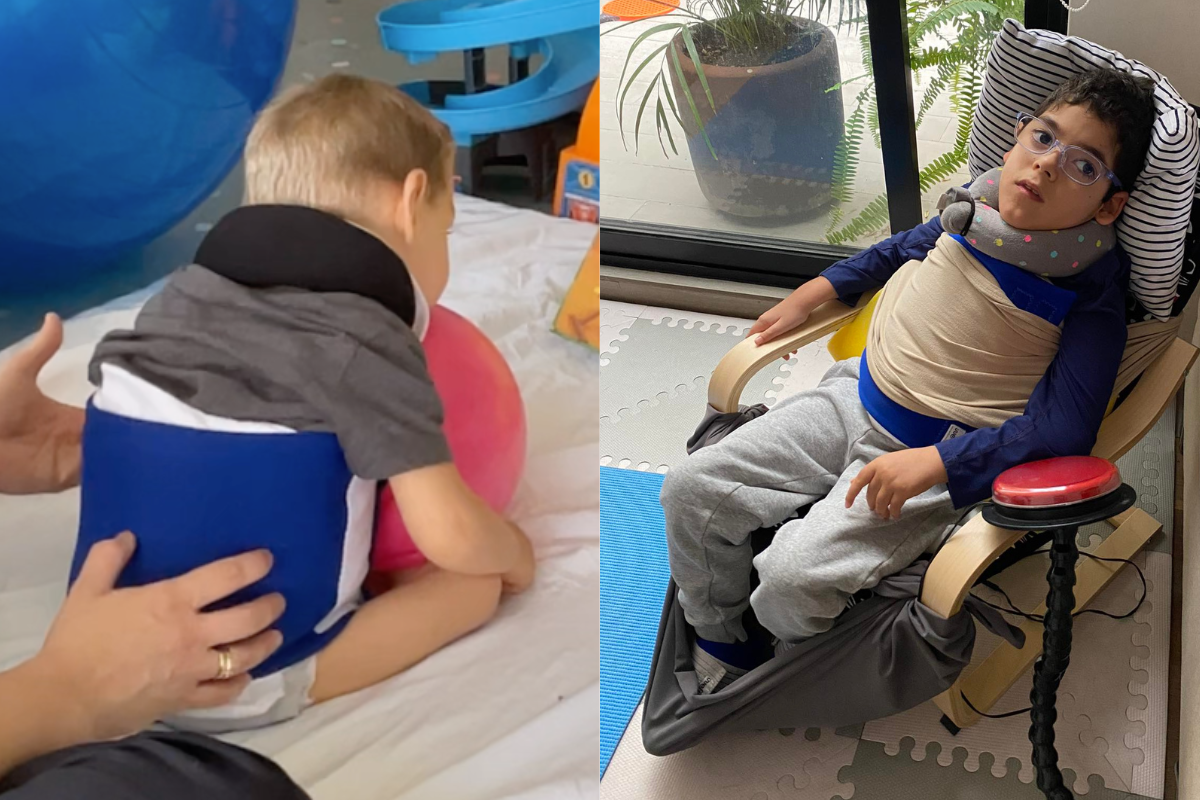
The same is true for the neck support. Every time your child's head begins to drift into a position that creates compression at the base of the skull, the support is there. It's not letting the tissue collapse. It's holding the door open, just enough, for the nervous system to find a better pattern. If you haven't made one yet, I have a free course that walks you through building it step by step — you can access it here:
If you haven’t made one yet, I have a free course that walks you through building it step by step — you can access it here: Free Neck Support Course.
This is not passive in the way we usually mean the word. This is ongoing, continuous, low-level input — and in fascia work, that kind of input is extraordinarily powerful.
Why Continuous Input Matters More Than Intensity
One of the principles I teach inside TheraParent is that fascia responds to gentleness and repetition far more than it responds to force. This is supported by how the tissue itself works: fibroblasts — the cells responsible for fascia's organization and adaptability — are activated not by aggressive stretching, but by gentle, sustained mechanical stimulation.
Think about water shaping a rock. It doesn't happen because the water is strong. It happens because the water shows up, consistently, over time.
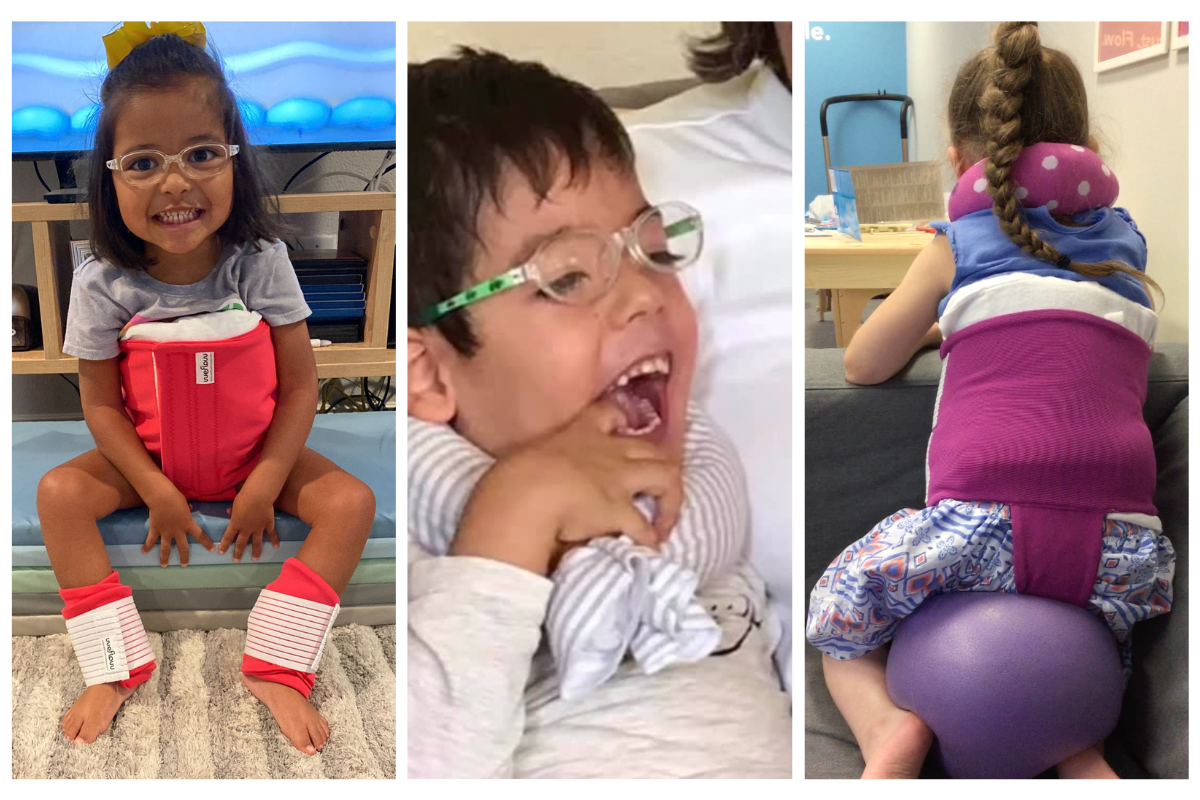
Your child's binder, when worn for hours each day, is that water.
I often tell families: if you cannot do a single technique today — if you're exhausted, unwell, or simply overwhelmed — please just make sure the binder is on. Make sure the neck support is in place. Keep the wrap around the torso. That's your baseline. That is still therapy. And on the days when you manage to do the exercises on top of that? That's the bonus.
What This Means on Your Hardest Days
I want to be honest with you: there will be weeks when you simply cannot do the full routine. There will be days when illness keeps you on the couch, or grief, stress, or sheer exhaustion makes even the gentlest exercise feel impossible.
Those days are part of the journey. They are not failures. They are simply human.
And on those days, your job is not to push through and do the exercises anyway. Your job is to make sure the passive tools are in place and trust that they are working.
Put the binder on. Fasten the neck support. Wrap the torso. And then rest — knowing that your child's body is still receiving input, still being supported, still responding to the gentle, continuous presence of these tools.
That is enough. On those days, that is more than enough.
A Small Shift in How You See Your Role
I think one of the most important things I can offer parents in this program is a new lens — not just on therapy techniques, but on what "doing therapy" actually means.
It doesn't always look like an active session on the floor. Sometimes it looks like a binder fastened before breakfast. A neck support in place before school. A wrap tucked in during a nap.
Those moments count. They add up. They are part of the reason children make progress — not just from the techniques parents learn, but from the consistent, life-friendly support that happens in between.
This is what I mean when I say therapy should fit your real life. Not because we're lowering the bar, but because we're expanding the definition of what therapy is. Small movements to feed fascia. Consistent input over time. A body that is supported, not just in sessions, but throughout the whole day.
You are doing more than you think. Even on the days it doesn't feel that way.
Ready to Start?
Take your first step into fascia therapy with our short, parent-friendly workshop:
The #1 Fascia Therapy To Improve Torso Control. I teach you the first exercise and how to make the binder so you can help your child today.
Gentle, effective, and easy to begin—no experience needed.
Want to Go Deeper?
If you’re ready to fully embrace this gentle approach and receive personalized support, apply for TheraParent Coaching—our therapeutic coaching program designed for dedicated parents like you.
Includes weekly calls, a tailored plan, and a supportive community.
Apply here – it’s free to explore.
Stay connected and inspired every week.
Subscribe to our weekly blog updates and receive new posts, encouragement, and fascia therapy tips right in
your inbox. So never miss the support and ideas that can make a difference in your journey.
